
Skylight Installation
Tucson skylight installation is mostly about two things: getting daylight into a room that does not have enough of it, and cutting an opening in a roof in a way that will still be watertight in twenty years. The first part is why people call. The second part is what actually determines whether it was a good idea.
That is the reason we do this and not general roofing. A skylight is a deliberate hole in the waterproof layer of your house. Over 30 years of roofing experience is what makes the flashing and the tie in right, and it is why the installation matters more than the brand on the box.
Call About An Installation
Rooms That Never Get Light
Most installation calls start with the same complaint. A hallway you have to light at noon. A kitchen that feels closed in. A bathroom or closet with no exterior wall, so a window is not even an option.
Those are three different problems and they take different products. An interior room with no wall to the outside cannot have a window, but it can have daylight. That is what a solar light tube is for. A living space with a large ceiling and a real view of the sky is usually a glass skylight.
We come look at the room, the roof above it, and what is in the attic between them, then tell you which one actually fits. Sometimes the answer is that a smaller unit in a better spot beats a large one in the obvious spot.
Skylights Or Solar Tubes
People ask which is better. They do different jobs.
- A skylight gives you a view of the sky and a lot of light across a wide area. It needs a clear path from the roof to the ceiling, and in a house with a deep attic that means building a light shaft down through it.
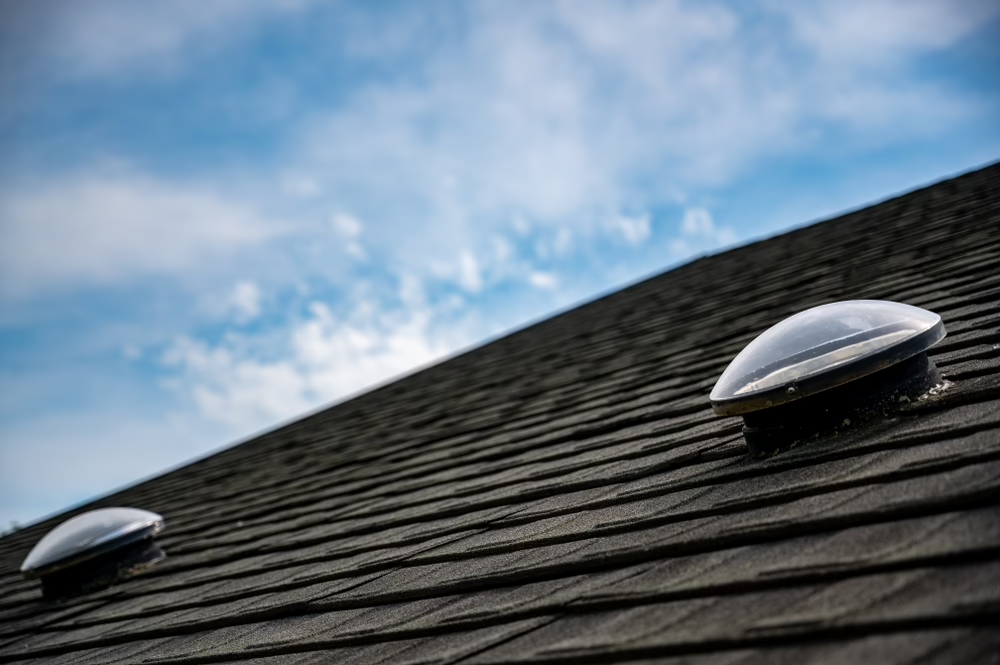
- A solar tube pushes daylight down a reflective tube from a small dome on the roof. It fits where a skylight cannot go, it works around obstructions in the attic, and it puts a surprising amount of light into a small room.
Roof space, attic depth, framing, and what is directly above the room all decide which is possible. That gets settled on site, not over the phone.

Your Roof Decides A Lot Of It
Tucson has tile, shingle, and a lot of flat and foam. Each one changes how the unit gets tied in.
On flat and foam roofs there is one detail that causes more problems than anything else. If the opening is cut so the unit sits level with or below the roof surface, water has nowhere to go. Flat roofs do not shed quickly. The water sits against the base of the skylight until it finds a way in, and then the skylight gets blamed for something the installation caused.
The fix is not sealant. It is building the curb up above the roof surface so water is diverted around the unit. We build it that way from the start, which is why we spend a lot of time repairing flat roof skylights that somebody else installed.
How An Installation Goes
- We look at the room and the roof. Where the light needs to land, what the framing above the ceiling will allow, roof type, and whether a skylight or a tube is the right call.
- You get the options and the numbers before anything is cut. Product type, size, placement, and what each choice changes. If two units in different spots would beat one big one, we say so.
- We do the work and close the roof. The opening, the framing, the curb, the flashing, the interior finish where the shaft meets the ceiling.
Most single unit residential installations are done in a day. Multiple units or a long light shaft through a deep attic can run longer, and we tell you that up front rather than after we are on the roof.
Call About Your Room
If You Are Already Planning A New Roof
That is the moment to deal with skylights, and it is the single most cost effective time to do it.
The roof is already open. A new unit tied into a new roof system at the same time is cleaner than coming back to it later, and you are not paying twice to disturb the same area. It also means the skylight and the roof are the same age, which matters more than people expect when both are nearing the end of their life at once.
The version of this we see go wrong is a reroof where twenty year old yellowed units get set back down on a brand new roof. The roof is fine and the skylights are still at the end of their life, and now the only way to change them is to open up new work.
What To Expect Long Term
A well installed skylight in Tucson generally runs 15 to 25 years. North facing units tend to last longest because they take less direct sun. Arizona is harder on these than almost anywhere, and the acrylic is what ages first.
Problems, when they happen, show up in one of two windows. Either in the first couple of years, which almost always points at how it was installed, or near the end of the unit’s life, which is just age. The long quiet stretch in between is what a good installation buys you.
One installation error worth knowing about, because we get called out behind it constantly. New units ship with a protective film on the lens. It is meant to be removed by taking off the retainer ring. Cutting it off with a utility knife instead scores the acrylic, and that turns into fine cracking within about two years and can block the drainage channels the unit depends on. The damage does not show up until long after whoever did it is gone.
Commercial Work
We also handle commercial skylight installation around Tucson, including larger openings, multiple unit layouts, and daylighting on low slope roofs. Same approach, bigger roof.
Getting Started
Tell us which room is dark and roughly what is above it, and we can usually tell you on the phone whether you are looking at a skylight, a solar tube, or a site visit to figure it out.
Call Now About Your Skylight
4.9 star rating from 50+ Tucson homeowner reviews on Google.